
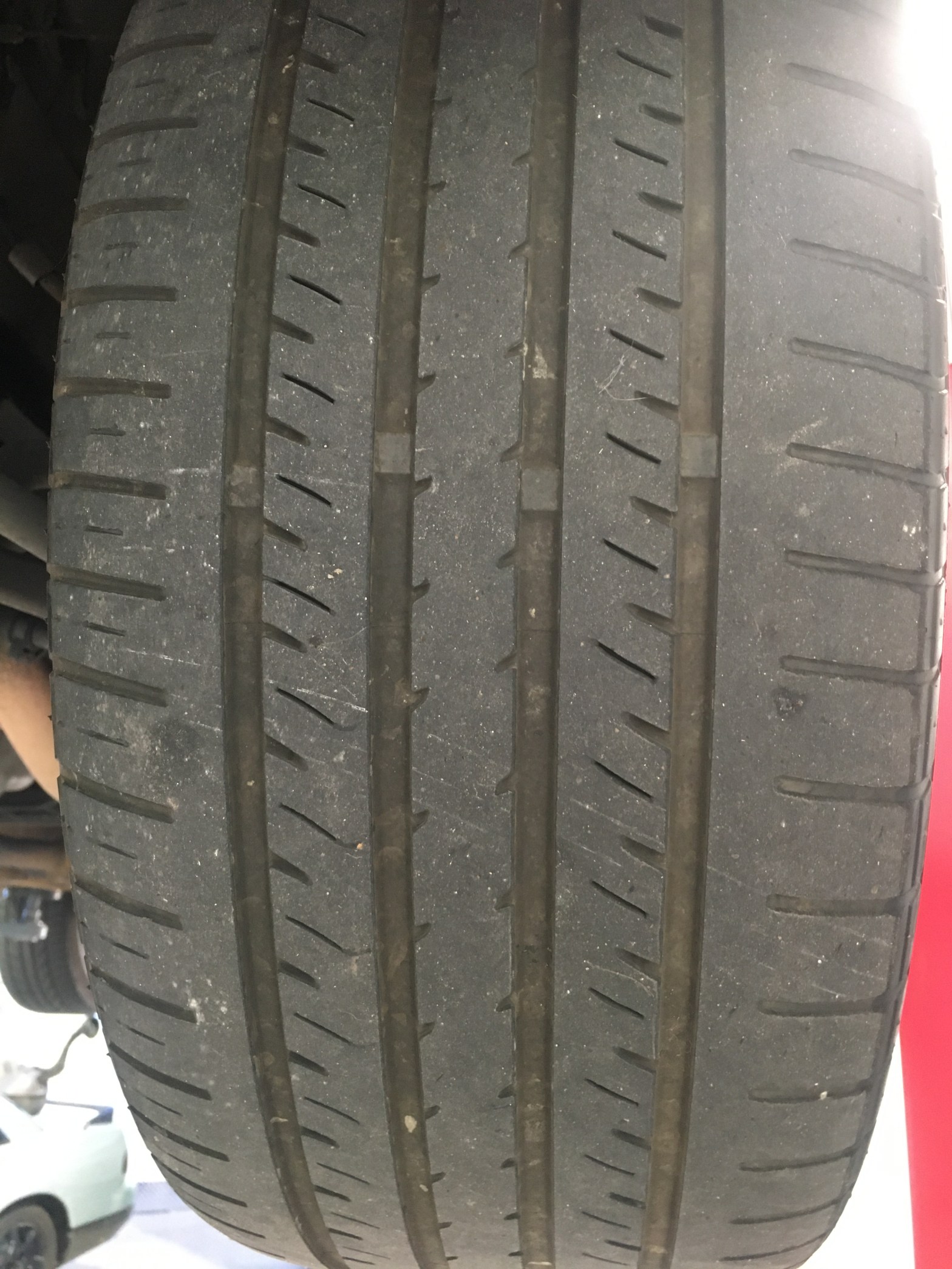
Tyre maintenance is an important issue which we take seriously. We understand how easy it is to forget about the condition of your tyres. They are a little bit like your teeth. You know you have them; you are aware of them and you do see them almost everyday but until you start having problems, they simply slip your mind. Even when you get a reminder from your mechanic, it is still easy for the matter to slip your mind. Maybe you just are not quite financial enough to see to them at this moment in time.
Tyres wear out over time just through general use but there are other components that will cause them to wear out quicker than they should.
- Poor tyre pressures: if any one of your tyres are not inflated properly, over or under inflated, this will cause them to wear out unevenly and will affect your cars handling. You should check your tyre pressures at least once monthly with a tyre pressure gauge, including the spare tyre. The manufacturer’s air pressure specifications are usually on a placard on the inside edge of the driver’s door or along a door jamb.
- Improper wheel alignment: A wheel alignment is a process that makes your car’s wheels accurately point in the exact same direction as your car’s steering wheel. This ensures safe and accurate steering, as well as directional changes. Correct wheel alignment is one of the best ways you can maximize the life of your tyres. As well as this, well aligned tyres are safer, save fuel, and provide better handling on the road. Your tyres can move out of alignment over time, or they can be jerked out of alignment by incidents such as hitting a curb or pothole.
- Wheel balance: Unbalanced wheels can cause your tyres to wear prematurely, as well as causing accelerated wear of your shock absorbers, struts and steering components. All this can seriously affect your car’s overall performance.
One of the best ways of helping keep your tyres in good condition for longer is by having them rotated regularly. Swapping your rear and front tyres will ensure that your tyres wear evenly, and last significantly longer. Tyres should be rotated every 5,000 to 8,000 km or at least every 6 months, even if there is no sign of uneven wear. Different vehicles will wear their tyres in different ways. Utes and station wagons wear their tyres differently to a sedan due to the weight distribution of the vehicles. Front wheel drive cars trye wear will be different to rear-wheel-drive cars.
And it is also worthwhile remembering that performance vehicles often have directional tyres which do not lend themselves to be rotated.
As part of your routine service here at Road & Track Dyno Centre, we check your vehicles tyres and will report on their condition.
 Vintage, Classic, Modern and High Perfomance Motor Vehicles